
FREQUENTLY ASKED QUESTIONS
What is the basic concept of Traditional Chinese Medicine?
Traditional Chinese Medicine (TCM) views the body as an interconnected system where comfort and well‑being depend on everything working in proper proportion. When something becomes excessive or insufficient, the body signals this through symptoms.
To visualize this, imagine adjusting a faucet. When the hot and cold water flow evenly, the temperature feels just right. But if one side runs stronger than the other, the water becomes too warm or too cool. TCM sees the body in a similar way: if internal “heat” is too strong, a person may feel unusually warm; if it’s too low, they may feel colder than others.
A TCM practitioner uses detailed observation and diagnostic methods to understand where these internal proportions are off. From there, they select acupuncture points and Chinese herbal formulas designed to support the body’s natural processes and encourage a more comfortable internal state.
How does acupuncture work and does everyone receive this treatment?
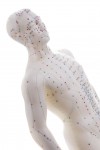 Thousands of years ago Chinese practitioners discovered that energy circulates throughout the body along channels called meridians.
Meridians transport and direct energy to every part of the body including your organs. Good health depends on balanced circulation of energy throughout the meridians. Any misdirection, blockage, or other derangement of the amount, flow, or balance of energy may result in pain, dysfunction, and ill health.
Over centuries of trial and error and meticulous observation, the Chinese accurately mapped the locations of the meridians and identified hundreds of specific points in the meridians where energy can be accessed and stimulated when there is an aberration of flow. TCM practitioners are educated to know which points on the meridians connect to what organs. Acupuncture needles are inserted into the meridians where the TCM practitioner has determined, by means of an exam, what organs are out of balance. The acupuncture needles do not have medicine or any chemicals on them. When they are inserted into the meridians it draws your own bodies energy to those specific points and the healing begins. The energy can then flow smoothly throughout your body.
Not all patients receive acupuncture. As previously stated, acupuncture needles use your own bodies energy, so if your body is too deficient on energy, the treatment will not work or last very long. In this situation Chinese herbs will be prescribed to strengthen your system to correct the imbalance.
Are acupuncture needles sterile and safe?
Yes. The government requires acupuncturists to follow very strict sterilization procedures. In addition, presterilized acupuncture needles are manufactured, packaged, and shipped in sterilized containers to ensure compliance with the law.
Are your herbs safe?
Good manufacturing practices (GMP) are production and testing practices that helps to ensure a quality product. Many countries have legislated that manufacturing and distributing companies must follow GMP procedures. Basic concepts of all of these guidelines have the goal of safeguarding the health of the patient as well as producing good quality products. In the U.S. a drug or supplement may be deemed adulterated if it has passed all of the specifications tests but is found to be manufactured in a condition which violates current good manufacturing guideline. Therefore, complying with GMP is a mandatory aspect in herb supplement manufacturing. GMP’s are enforced in the United States by the U.S. FDA
The herbal supplement manufacturing plant and suppliers that our company uses are full scale GMP certified.
Is acupuncture painful?
While most people express fear or anxiety of needles before their first treatment, they are amazed at how comfortable they are during treatment. Unlike hypodermic needles that are thick for injections, acupuncture needles are hair-fine and flexible. Inserted into an acupoint by a skilled acupuncturist, the needle produces little or no sensation at all. When the needle makes contact with Chi, the energy, most patients experience a slight energetic sensation.
How many treatments do I need?
Since each person is unique, the number of treatments will vary. The determining factors are the severity and history of each person’s health problem, as well as the general health of the individual. Other factor’s are the patient’s attitude, diet, lifestyle, and determination. Usually one or two treatments per week are necessary to begin with. Many conditions may respond quickly to acupuncture and herbal therapy. However, we are not miracle workers; if you’ve been dealing with a health concern for a long time, it’s unrealistic to expect significant change after just one or two treatments.
How long do the acupuncture sessions last?
The needles are left in place for 20-30 minutes. If the doctor recommends acupuncture treatment on your first visit, plan 1 hour for your visit. For follow-up visits, plan 30-45 minutes.
What kind of ailments does TCM treat?
TCM works with a wide range of health concerns, with the exception of issues requiring emergency or structural care such as broken bones. Rather than focusing on a symptom or a Western diagnostic label, TCM looks at the underlying patterns that create those symptoms. This means that no matter what diagnosis you’ve received from a Western medical provider, a TCM practitioner is primarily interested in how you feel and the specific symptoms you’re experiencing. Labels like migraines, diabetes, or high blood pressure describe groups of symptoms, but in TCM, two people with the same diagnosis may have completely different underlying patterns—and are supported with different approaches accordingly.
Are there side effects with TCM and medications I am presently taking?
Be sure to inform the practitioner of all medications you are currently taking. The Chinese herbs we use are plant‑based and formulated without synthetic additives, and they are generally considered compatible with most medications. However, if you take medicines that require regular monitoring—such as those for blood pressure or blood sugar—it’s important to continue checking your readings as recommended by your healthcare provider. As your body responds to treatment, your needs may shift, and taking medication at times when it’s not required could lead to unwanted effects. Keeping track of your levels helps ensure your safety and supports your overall care
Does medical insurance cover acupuncture?
Some health insurance companies cover the acupuncture treatment and office visit, but none of them will cover the cost of herbs. You will need to contact your health insurance company to verify if your policy has acupuncture coverage with an out of network, non-participating provider and if there are any restrictions. If you will be filing your own insurance for reimbursement, be sure to ask our Front Desk Receptionists to put your Diagnosis Codes in the computer so that they will print on your receipt that you will use to file for reimbursement. Since health insurance companies change their policies often, we encourage you to call your insurance company each year to verify coverage. Medicare & Medicaid do not offer coverage for acupuncture.
What can I expect on my first visit?
During your first visit the practitioner will observe your complexion and may look at your tongue, check your pulses and ask you questions about your symptoms, your eating habits and your lifestyle. Every symptom, no matter how small you may think it is, is part of the puzzle that the practitioner uses to get to the root cause of your health problems. Making a list of your symptoms before you come for your appointment is recommended, as we often tend to forget some of our symptoms when speaking with the practitioner. The practitioner does not need to know what diseases or named health conditions you have, or what other doctors say the reason is for your health problems, all they need to know is what symptoms you are experiencing. The practitioner will then advise you of his/her findings and what treatment they recommend. Treatment can begin the day of your first visit. We ask that you please bathe before you come into the office. The acupuncture treatments usually require you to remove your socks and shoes. Be sure to wear loose fitting sleeves and pant legs.
What can I expect on my follow-up visits?
Your follow‑up visits play an important role in helping the practitioner understand how your body is responding to treatment. Because every person is unique, responses can vary. At each visit, the practitioner will check your pulses and you’ll be asked to share any changes in your symptoms. Based on these findings, the practitioner will discuss your progress and whether continued treatment is recommended. Staying consistent with the guidance you’re given helps you get the most out of your care.